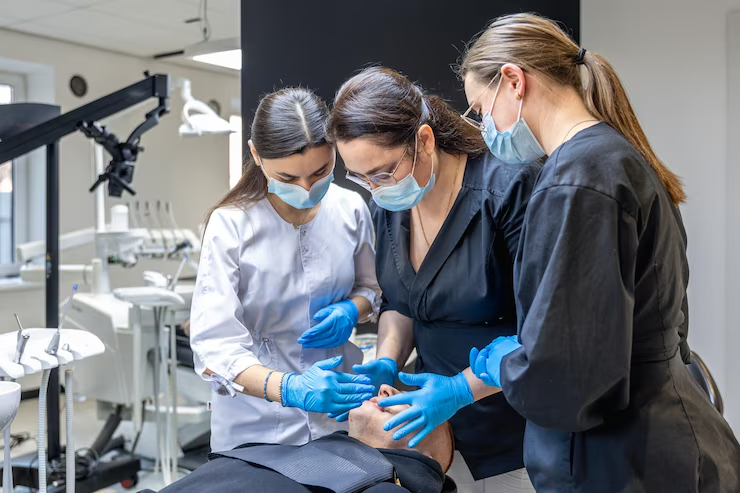
For many aspiring healthcare professionals, a career in dental medicine offers the perfect blend of clinical expertise, artistic precision, and patient interaction. If you are considering this path, you have likely realized that local competition can be fierce. This is why more students than ever are choosing to study dentistry in Europe.
From world-class technology to globally recognized degrees, Europe provides an unparalleled environment for dental education in Europe. This guide will walk you through the essential details of pursuing a BDS in Europe, covering everything from curriculum structure to career prospects.
Why Pursue Dentistry Abroad in Europe?
Europe is home to some of the oldest and most prestigious dental universities in Europe. International students are drawn to the continent for several reasons:
- Integrated Clinical Training: Unlike programs that focus heavily on theory, European dental courses Europe emphasize hands-on experience. Students often begin working in simulation labs by the second year and transition to real patients under supervision by the third or fourth year.
- English-Taught Programs: Many European institutions have adapted their curricula to cater to the global market, offering full dental degrees in English without compromising on academic rigor.
- Global Mobility: An international dental degree from an EU-recognized university allows you to apply for licensure in various countries across the globe, including the UK and parts of North America (subject to local equivalency exams).
Degree Structure: What to Expect
When you enroll in a program to study dentistry in Europe, you are typically entering a five to six-year integrated program. While some regions use the term BDS in Europe, many institutions award the DMD (Doctor of Dental Medicine) or DDS (Doctor of Dental Surgery) degree.
1. The Pre-Clinical Phase (Years 1–2)
In the first two years, dental students Europe focus on the foundational sciences. You will study:
- General Anatomy and Histology
- Biochemistry and Physiology
- Materials Science (learning about the substances used in fillings and prosthetics)
2. The Clinical Phase (Years 3–5 or 6)
During this phase, the focus shifts to specialized dental practice. This includes training in:
- Orthodontics: Correcting teeth and jaw alignment.
- Endodontics: Specializing in root canal therapy.
- Oral Surgery: Performing extractions and minor surgical procedures.
- Pediatric Dentistry: Managing the oral health of children.
Costs and Financial Planning: BDS Abroad Fees
One of the biggest advantages of choosing to study dentistry in Europe is the affordability. While private dental schools in the U.S. can cost upwards of $80,000 per year, European options are much more accessible.
| Expense Category | Estimated Annual Cost (USD) |
| BDS Abroad Fees (Public/Subsidized) | $1,000 – $5,000 |
| English-Taught Private Programs | $12,000 – $22,000 |
| Living Expenses (Varies by Region) | $6,000 – $12,000 |
Many affordable medicine and dental universities in Europe allow students to pay in installments, making it easier to manage finances without taking on life-altering debt.
Admission Requirements for Dental Education in Europe
Securing admission for dentistry in Europe is a multi-step process. Universities look for students who are not only academically capable but also possess the manual dexterity required for the field.
- High School Excellence: You should have a strong transcript with a focus on Biology and Chemistry.
- Entrance Exams: Some universities require a proprietary entrance test covering science and logical reasoning.
- Manual Dexterity Tests: Because dentistry is a “hands-on” job, some schools include a practical assessment to ensure you have the fine motor skills needed for dental work.
- Language Proficiency: If you are applying for an English track, a TOEFL or IELTS score is usually required unless your previous education was in English.
Career Prospects: Building a Dentistry Career Abroad
Earning an international dental degree is a gateway to a lucrative dentistry career abroad. The demand for dental professionals is rising globally due to an aging population and increased awareness of oral hygiene.
Graduates can pursue various paths:
- Private Practice: Opening a clinic or joining an established group practice.
- Specialization: Pursuing a Master’s or PhD in fields like Implantology or Periodontics.
- Public Health: Working with government organizations to improve community oral health.
- Research & Academia: Contributing to the development of new dental materials and teaching future generations.
Frequently Asked Questions
1. Is a dental degree from Europe valid in the United States or Canada?
While European degrees are highly respected, the U.S. and Canada usually require international graduates to complete a two-year “Advanced Standing” program or pass specific equivalency exams (like the NDEB in Canada) to practice.
2. How long is a BDS in Europe?
Most dental programs in Europe last between 5 and 6 years, depending on the specific university’s curriculum and whether a mandatory internship year is included.
3. Do I need to speak the local language to study dentistry in Europe?
Many universities offer the entire degree in English. However, to interact with patients during your clinical years, you will likely need to learn the basic local language, which most universities provide classes for.
4. Are there scholarships for international dental students?
Yes, many European governments and individual universities offer merit-based scholarships. It is advisable to check the “International Admissions” section of each university’s website for specific opportunities.
Conclusion
Deciding to study dentistry in Europe is a bold step toward a successful and rewarding professional life. With a focus on high-quality dental education in Europe and practical experience, you will be well-equipped to join the global healthcare workforce as a skilled dentist.